Stoic Saturday
by chuckofish
The DH gave me Ryan Holiday’s The Daily Stoic for Christmas.

Each daily entry starts with a quotation from such greats as Marcus Aurelius, Seneca, and Epictetus, followed by the author’s brief commentary. Every evening after dinner the DH reads the day’s selection aloud to James and me, and then we discuss it. It’s very informal and a lot of fun. If we miss a night, we just catch up the next day. Among other things, the book reminds those of us having trouble dealing with today’s world that things were ever thus, if not actually much worse.
Take poor Seneca (4 BC-65 AD), for example. Born into a prominent Roman family, Seneca made a splash in the Senate, but drew the ire of the Emperor Caligula, who promptly ordered him to commit suicide. Only the fact that Seneca was already gravely ill and expected to die saved him. Caligula’s death in 41 AD did not solve Seneca’s problems, for Messalina, wife of the new Emperor, Claudius, accused Seneca of having an affair with Caligula’s sister.
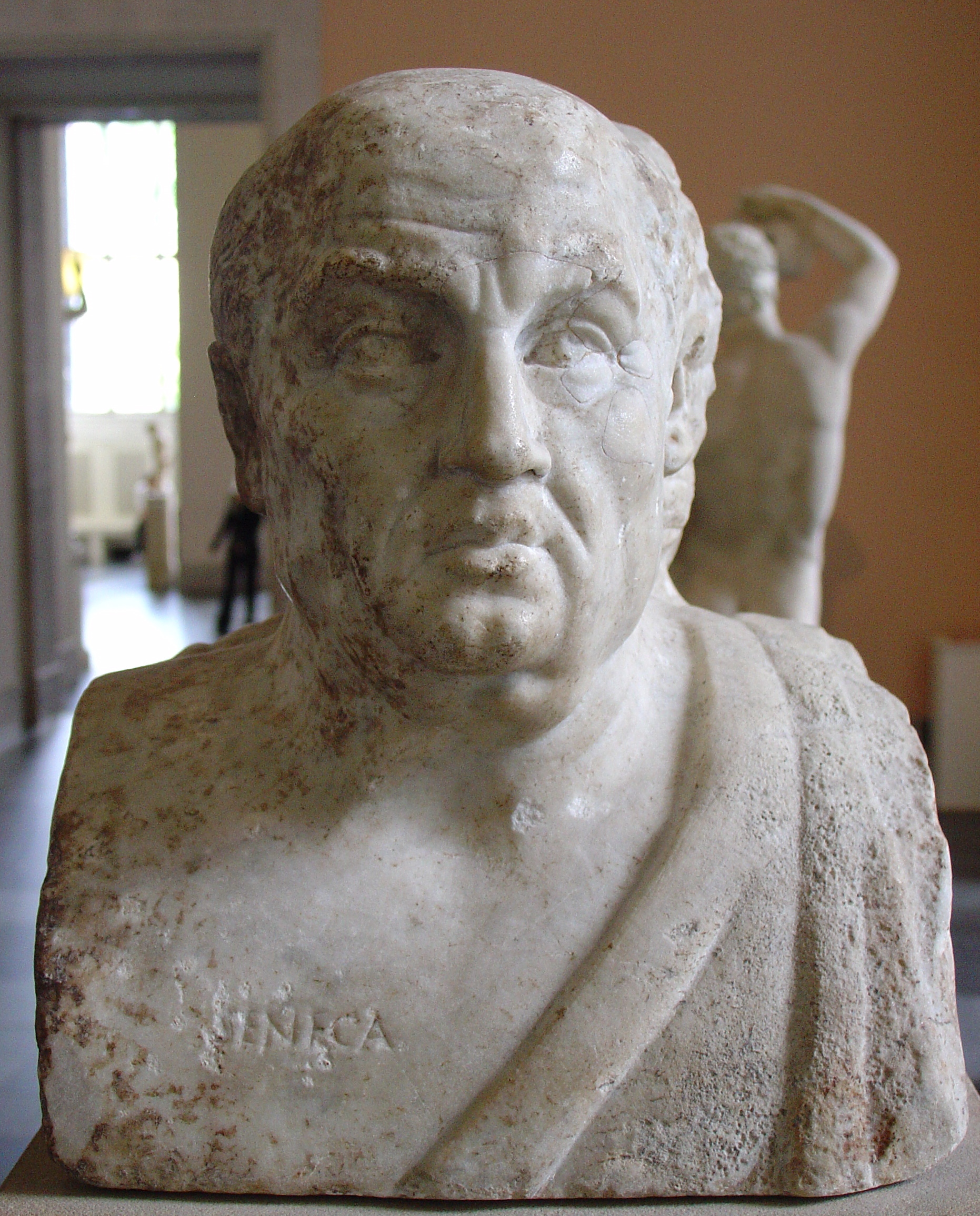
Would you have an affair with this man?
As a result, Seneca was exiled to Corsica, where he remained until 49 AD, when Agripinna, Claudius’ sister, had him recalled to tutor her son, Nero, the guy who, as Emperor, would fiddle while Rome burned. Things did not turn out well for Seneca.
By 54 Nero had become Emperor. At first, Seneca advised young Nero and everything seemed to be going well.
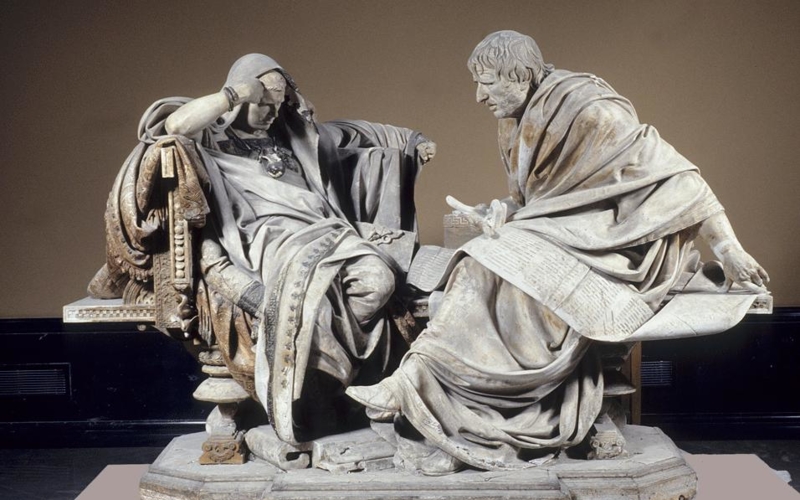
Not a willing pupil. Nero-and-Seneca Converse by Eduardo-Barron. Prado-Museum
Eventually, the paranoid emperor accused Seneca of conspiring to murder him (Nero), and forced the unfortunate philosopher to commit suicide. That’s what you get for hobnobbing with the rich and powerful.
Whatever Seneca’s personal failures, he was a great thinker and writer. He found a way to deal with life’s challenges — and certainly he faced a lot of those. When you feel overwhelmed or powerless, consider reading the Stoics. As Epictetus wrote in his Discourses (2.5.4-5):
The chief task in life is simply this: to identify and separate matters so that I can say clearly to myself which are externals not under my control, and which have to do with the choices I actually control.
In other words, there’s no point getting upset about things you can’t control. Concentrate on what you can control, namely, yourself. As good old Seneca said, “the happy life is to have a mind that is free, lofty, fearless and steadfast” (Essays and Letters).
Sounds good to me.
Be free, lofty, fearless and steadfast this weekend!
 dual personalities