dual personalities

Month: January, 2018

“Well, all that glitters isn’t gold, I know you’ve heard that story told.”*

by chuckofish

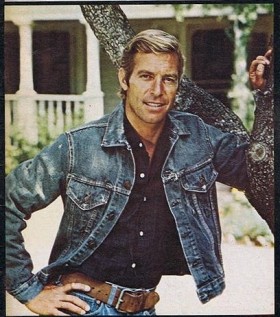
Today we toast actor James Franciscus (January 31, 1934 – July 8, 1991) on his birthday.

JF00b.jpg

You remember him. He was in a lot of television shows in the 60s and 70s (according to my research he was on at least three TV Guide covers!) and he made a couple of memorable movies. Unfortunately he made a lot of bombs as well. Mostly he could rock a jeans jacket.
280full.jpg

But did you know that he was born and raised in St. Louis? His father was a pilot in WWII and was killed in action, so after his mother remarried, the family moved east, thus interrupting his idyllic country childhood. After graduating from Yale, he headed west to stardom.

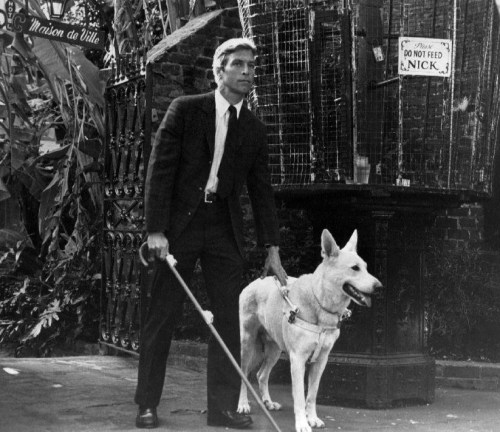
Growing up, we always liked him (as did our mother) and we watched whichever of his shows or movie-of-the-week was on the telly. A particular favorite was Longstreet (1971-72) which starred Franciscus as insurance investigator Mike Longstreet.
Longstreet_1971.JPG

After a bomb (hidden in a champagne bottle) kills his wife and leaves him blind, Longstreet pursues and captures the killers. He then continues his career as an insurance investigator despite his blindness. Bruce Lee was a semi-regular on the show, so you know it was legit. It was a cool show. Really. Too bad it only lasted a year.

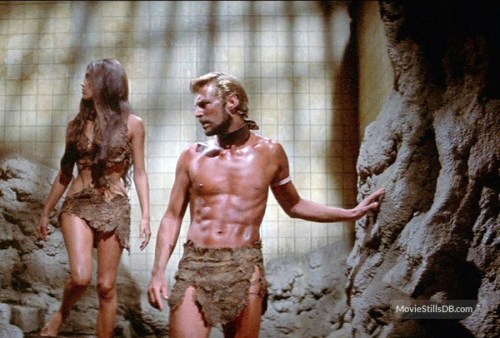
Although Beneath the Planet of the Apes (1970) is admittedly a special movie (and Franciscus is nearly naked throughout–check out those abs),
beneath-the-planet-of-the-apes-lg.jpg

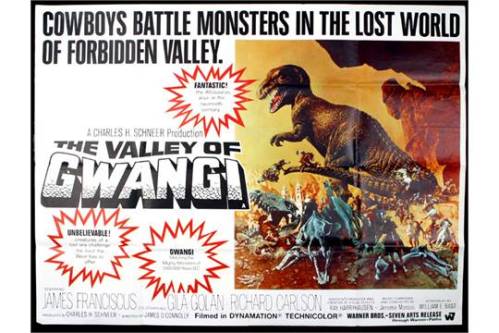
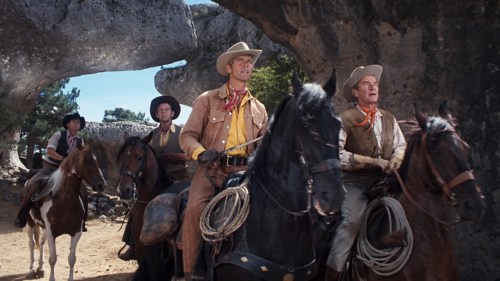
my personal favorite is the The Valley of Gwangi (1969)–a western/fantasy spectacle with special effects by the great Ray Harryhausen and music by the great Jerome Moross.
540x360.jpg

This movie surfaced on TCM last week and I DVR’d it and watched it one evening with the OM. It was a diverting 90 minutes to be sure. This movie deserves to be much more famous than it is! I mean, really–cowboys lassoing a T-Rex?

1490178960_2.jpg

MV5BMGM5YzBlMDItYTA3MC00NDhlLTkxYmUtNWRhYTFmNjhlNGM1XkEyXkFqcGdeQXVyMTE2NzA0Ng@@._V1_.jpg

A T-Rex bringing down a Mexican cathedral?

pdvd_155.jpg

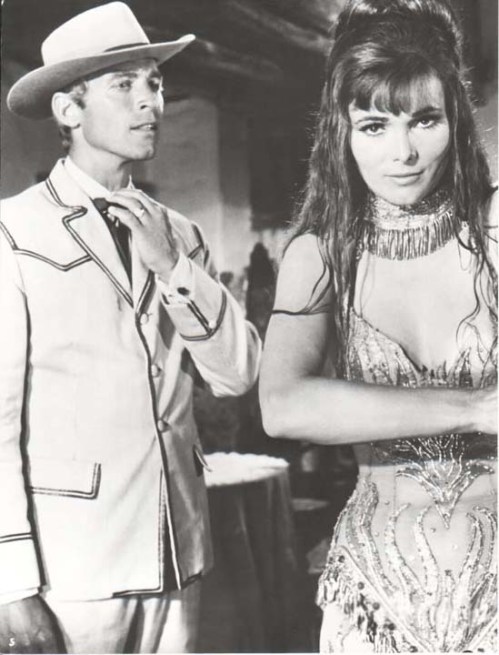
James Franciscus in this outfit?

james-franciscus-valleyofgwangi-stills-005.JPG

Well, suffice it to say, you should try to find this movie and watch it. There is something quite endearing about these pre-CG films and the action scenes are really quite exciting. And the music is terrific.

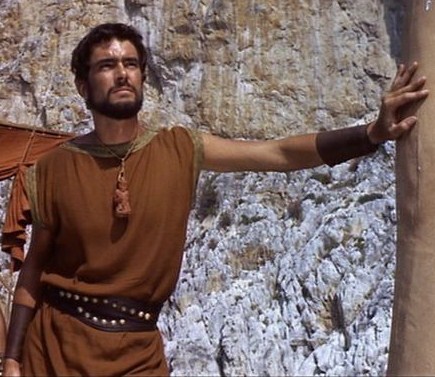
So don’t forget to toast old James Franciscus tonight! When his mother died in the 1980s she left a big chunk of money to the Episcopal church I attended. No one remembered who she was by then (she had been gone for years) but the gift went to build the St. George Chapel and was much appreciated. Funnily enough, there was another old lady at this same church at the time whose son also had a go at a career as a movie star, although he was not nearly as successful as James Franciscus. Who remembers this guy?
9912709b5e6a9e06a258e1c58e8fdc61.jpg

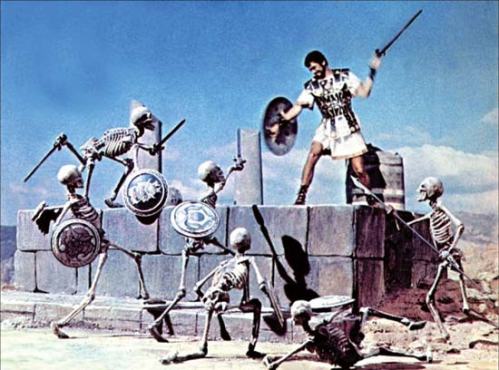
Yes, that’s Todd Armstrong, who starred in Jason and the Argonauts (1963)–another Harryhausen feature. He fought those scary skeletons.
176348-004-79EA5ACF.jpg

And, hey, he was the son of the architect who designed the famous meeting house for those ethical humanists I blogged about last week!

ethical.jpg

Let’s hear it for synchronicity! The world is more than we know.

*Neil Young
“One clover, and a bee, And revery”*

by chuckofish

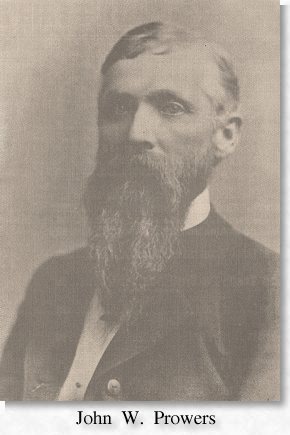
Yesterday was the birthday of one of our favorite ancestors, John Wesley Prowers,

bent1881_jwprowers.jpgthe older brother of our great-great grandmother, Mary Prowers Hough. I toasted him and we watched Red River (1948) in his honor.
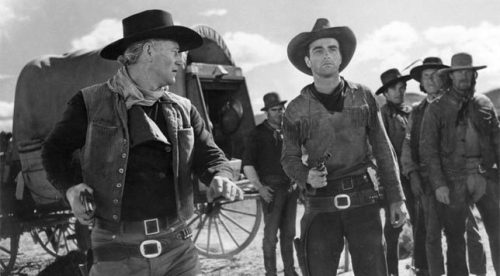

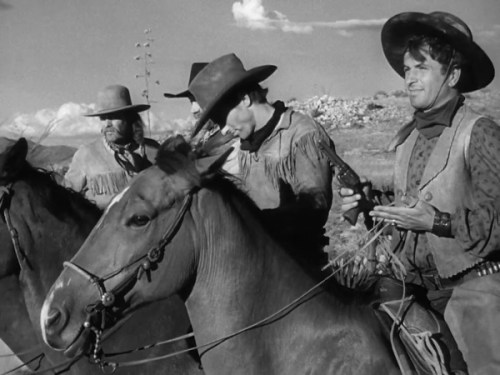
Red-River-1948-644x356.jpg

A more appropriate movie would probably be The Rare Breed (1966) with James Stewart, which is a fictionalized account of the introduction of the Hereford breed in America, but I didn’t feel like it. Red River is a much better movie.

It is, indeed, a fine, fine movie. The first hour is really great. It wanders a bit after that–especially when John Wayne is off stage–and my mind did too. Watching this time, I was struck by several things.

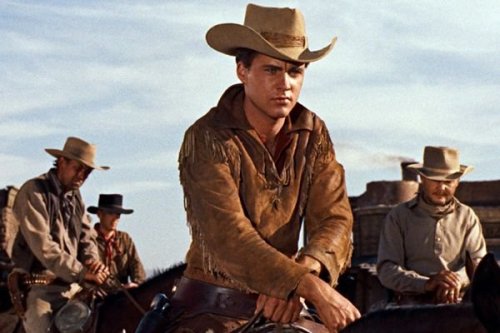
1. Ricky Nelson In Rio Bravo a few years later is really channeling Montgomery Clift hard. He even rubs his nose the same way.

tumblr_mapwe5urzf1ryhww8o1_1280.jpg

2.Walter Brennan plays a character named Nadine Groot. I wonder if the character Groot in Guardians of the Galaxy (2014) is named after him. If not, he should be.

guardians-of-the-galaxy-groot-13.jpg

3. Young Noah Beery reminded me a lot of Nathan Fillion.

600px-RR-NBj-SAA-01.jpg

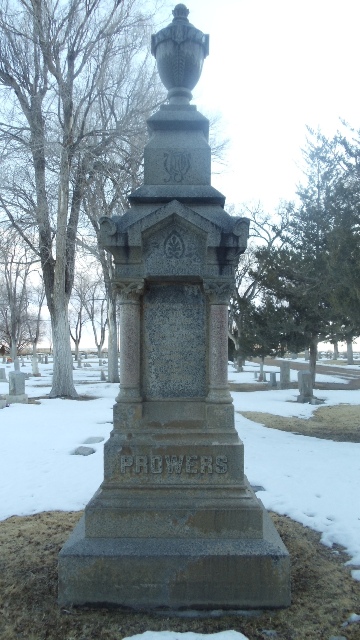
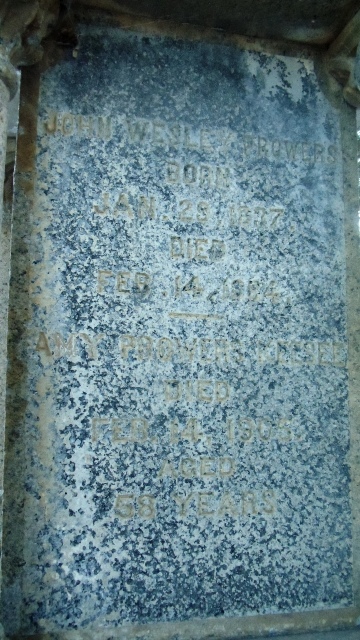
Anyway, John Prowers, a bonafide cattle king, died of cancer at age 46 in 1884. He was laid to rest in Las Animas Cemetery in Bent County, Colorado–not on the lone prairie, but in his family plot.54629765_132759232704.jpgProwers grave.jpgWilliam Bent is buried there as well.455abc96-fdf9-4846-b5bf-a4fbd9ed1111_d.JPGMaybe I will make it to Las Animas some day. It is kind of a godforsaken place, but that is not in itself unappealing.

“O bury me not on the lone prairie.”
These words came low and mournfully
From the pallid lips of the youth who lay
On his dying bed at the close of day

He had wasted and pined ’til o’er his brow
Death’s shades were slowly gathering now
He thought of home and loved ones nigh
As the cowboys gathered to see him die

“O bury me not on the lone prairie
Where coyotes howl and the wind blows free
In a narrow grave just six by three—
O bury me not on the lone prairie”

“It matters not, I’ve been told
Where the body lies when the heart grows cold
Yet grant, o grant, this wish to me
O bury me not on the lone prairie.”

“I’ve always wished to be laid when I died
In a little churchyard on the green hillside
By my father’s grave, there let me be
O bury me not on the lone prairie.”

“I wish to lie where a mother’s prayer
And a sister’s tear will mingle there
Where friends can come and weep o’er me
O bury me not on the lone prairie.”

I always liked this song, don’t you? The theme is played throughout Red River and a lot of other great westerns too. Think Stagecoach (1939).

*Emily Dickinson

“To make a prairie it takes a clover and one bee,
One clover, and a bee,
And revery.
The revery alone will do,
If bees are few.”

Lord hear our prayer and be our guide

by chuckofish

We had more lovely warm weather this weekend and everyone was out and about. I even got the OM moving. (He usually hibernates in January.)

53750312710__1C7039FE-0470-4BA3-B72C-4B6E22044873.JPG

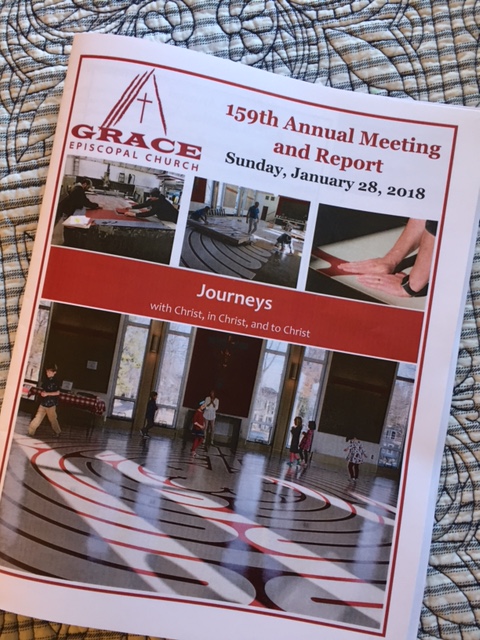
I also went to the church annual meeting…

IMG_3052.JPG

…and the dedication of our new labyrinth in Albright Hall. The labyrinth is pretty cool. You will recall that the labyrinth in Christian parlance is a spiritual tool for prayer, a metaphor for your own spiritual journey–taking the next step with God. There is a famous one at Chartres Cathedral in France and they have one at Grace Episcopal Cathedral in San Francisco.

Labyrinth.JPG

We used to have a portable labyrinth on a large piece of fabric which we would haul out from time to time. It finally wore out and, when we needed to renovate the floor in Albright Hall, someone had the bright idea of building a permanent one. Pretty clever.

Speaking of floor coverings, I rescued an amazing handmade needlepoint rug at the most recent Link Auction–for $10!

IMG_3054.JPG

How great is that? The amount of work that goes into a needlepoint rug is beyond, you know, my comprehension. I also picked up a copy of the Women’s Exchange cookbook (Memphis, TN) from 1966 in my travels this weekend. What a classic! The recipes are all like: “Punch (My Mother’s)” with the notation that “one quart of champagne may be used instead of ginger ale.” My kind of ladies. Plus they all have names like Mrs. Stovall Jeter and Mary Chism Roberts and Mrs. Shelby Foote. There are also quotes sprinkled throughout (“Coquetry whets the appetite, flirtation depraves it” in the appetizer section). Fun to read and who knows, maybe I’ll make some of Mrs. Lucius McGehee’s Rum Mousse. I will not, however, try Mr. Johnny Jacobs’ recipe for Barbequed Raccoon.

The wee babes came over for dinner with their parents on Sunday night and we had tortellini–always a popular choice–although the wee laddie preferred the organic cheese ducks (like Pepperidge Farm Gold Fish).

I had cleaned up an old Fisher-Price horsie we found in the basement (from the 1980s) and the wee babes loved it.

IMG_1695.jpegIMG_1697.jpeg

Good times. (Thanks to the boy, once again, for the pictures of the babes.)

Have a good week!

Young boys should never be sent to bed. They always wake up a day older.*

by chuckofish

Even when you don’t send your boy to bed, he sometimes just falls asleep wherever he happens to be — in this case, curled up against the family room wall, lying on top of the TV remote.

I found this picture yesterday, while tidying up my desk at work.

Then “time like an ever-flowing stream” does its work…and before you know it, he’s  a 22 year old Yukon Cornelius!

I wouldn’t have it any other way.

Aside from finding old photos of my darling youngest son, I didn’t do much this week besides fill out paperwork and go to meetings. I finished reading Hilary Mantel’s  A Place of Greater Safety. As it involves major historical figures of the French Revolution, it contains no surprises — everyone gets guillotined — yet, even so, she manages to make it heart-rending:

There is the world and there is the shadow-world; there is the world of freedom and illusion, and then there is the real world, in which we watch, year by year, the people we love hammer on their chains.

Having finished that book, I am now reading something that a friend lent me: Philip Kerr’s Berlin Noir trilogy about a private detective in 1930s Berlin — not exactly a shift to the lighter side!

Although I haven’t read very much, I’m a little put off by Kerr’s dogged but not quite successful effort to be Raymond Chandler. On the plus side, I’m encouraged by the reviewer’s comment in the New Yorker: “one thing I like about [Kerr] is that he makes bad behavior look bad again.” And he’s Scottish, so that’s another plus. I’ll let you know…

It should be a quiet weekend, at least for me. Boy #1 is doing double shifts. During the week he’s a juror in a sensational murder trial (about which I can say no more) and on the weekend he’s a frenetic line cook at our local hotel. There’s no rest for that weary lad — he may end up falling asleep wherever he happens to be. If so, I’ll try to get a picture…

Have a wonderful weekend and get some rest!

*J.M. Barrie

Let angels prostrate fall*

by chuckofish

Friday at last–what a long week it has been! The highlight of mine was when daughter #1 came home Wednesday night because she had business in town on Thursday.

Screen Shot 2018-01-25 at 10.27.31 AM.png

That was a fun, but short, diversion for me! Nothing like a mid-week wine & gab session.

A quiet weekend of puttering is fine with me. Hopefully we will see the wee babes for our usual Sunday night family dinner.

Unknown-3.jpeg

Miss Lottie looks so grown up with her four teeth!

Unknown-2.jpeg

The wee bud says, “I have a tooth too!”

I will note one historical milestone happening this weekend: Saturday is the anniversary of the dedication ceremonies of the New County Meeting House of the Ethical Society of St. Louis (designed by Harris Armstrong) in 1965.

ethic4.jpgThe Ethical Society of St. Louis was organized in 1886 under the leadership of Walter L. Sheldon. Meetings, services and Sunday School were conducted in the Museum of Fine Arts at Nineteenth and Locust streets, where social and settlement work projects were also instituted. Under Sheldon’s direction the Self-Culture Hall Association came into being. (“Self-Culture”?) After his death, members of the Ethical Society erected the Sheldon Memorial in his name in 1912 and it served as the society’s meeting place until the move to the new Mid-Century Modern structure. In its heyday speakers such as Margaret Mead, Thurgood Marshall, R. Buckminster Fuller, Norman Cousins and Martha Gellhorn spoke from its stage and the St. Louis Chapter of the League of Women Voters was founded in The Sheldon’s Green Room. The Sheldon is now a concert venue and art gallery.1200px-Sheldonconcerthall.jpgToday the Ethical Society, located in an upscale neighborhood in west county, offers “Sunday School” and nursery school for children and adult education classes on various topics including a book of the month club, chorus, discussion on current events, ethical circles, ethical mindfulness meditation and other discussion groups. A Humanist congregation, they “affirm human dignity, celebrate reason, and work together for social change.” It is a “place where people come together to explore the biggest questions of life without reference to scripture, religion, or God.”




Screen Shot 2018-01-25 at 11.10.26 AM.png

I see from their Instagram that their congregation appears to be as old and gray as any mainline Christian group. LOL.

IMG_1575.jpeg

Phooey!

Well, in honor of the ethical humanists, I will go to church on Sunday and to our Annual Meeting.

(It is interesting to note that the Church of the Immacolata, located across the street from the Ethical Society and built two years later, chose this scripture for their cornerstone:

church-of-immacolata13.jpg

In your face, ethical humanists!

Have a great weekend!

*”All Hail the Power of Jesus Name” by Edward Perronet (1779)

Running on divine momentum

by chuckofish

books-and-art-woman-reading-on-a-settee-c1905-1910william-1459454584_org.jpg

Somewhere in my reading recently I ran across the book Morte d’Urban by J.F. Powers, which won the National Book Award in 1963. (It was re-issued in 2000 by the New York Review of Books Classics series.) I had never heard of “this comic masterpiece” or its author. Upon doing a little research, I discovered that he was an American novelist and short-story writer “who often drew his inspiration from developments in the Catholic Church, and was known for his studies of Catholic priests in the Midwest. Although not a priest himself, he [was] known for having captured a “clerical idiom” in postwar North America.” I found it in my university library and checked it out.

morte-d_urban_1024x1024

This cover art makes no sense.

It seemed to him that the Order of St Clement labored under the curse of mediocrity, and had done so almost from the beginning. In Europe, the Clementines hadn’t (it was always said) recovered from the French Revolution. It was certain that they hadn’t ever really got going in the New World. Their history revealed little to brag about-one saint (the Holy Founder) and a few bishops of missionary sees, no theologians worthy of the name, no original thinkers, not even a scientist. The Clementines were unique in that they were noted for nothing at all. They were in bad shape all over the world. The Chicago province was probably better off than the others, but that wasn’t saying much. Their college was failing, their high schools were a breakeven proposition at best, and their parishes, except for a few, were in unsettled parts of Texas and New Mexico where no order in its right mind would go. The latest white elephant was an abandoned sanitarium in rural Minnesota! But that was typical of Father Boniface and the rest of them. They just didn’t know a bad thing when they saw it-or a good one.

A book about such an Order has possibilities. It could be hilarious. But unfortunately, Morte d’Urban is merely excruciating. The  minor characters are not lovable, they are just annoying, and the hero–a priest with actual talent, but no real spiritual life–is not likable enough. I am not sure what to make of him. The irony of a talented, misused man laboring in a two-bit Order is lost when you realize that as a Christian, he shouldn’t care. And what is he good at really? Fund-raising? Indeed, we never really understand what motivates the hero. He does not seem to do anything out of religious fervor, love of the church or God. He seems to be driven by self-esteem. He makes one hanker for a priest like the one in Graham Greene’s The Power and the Glory, who knows he is a bad priest:

“What an unbearable creature he must have been in those days–and yet in those days he had been comparatively innocent. That was another mystery: it sometimes seemed to him that venial sins–impatience, an unimportant lie, pride, a neglected opportunity–cut you off from grace more completely than the worst sins of all. Then, in his innocence, he had felt no love for anyone; now in his corruption he had learnt.”

Powers appears to have been too good a Catholic to really let go and be critical. He lays it all out–the priests who are not “called” to their work, who just want to get through the day with the least output of effort and then watch television; and their superiors who desire the same (just in a nicer setting) and seem to want to punish any priest who might outshine them. But he never asks why this is the situation. One feels that there should be at least one character who is not afraid to be openly critical of the Powers That Be.

Screen Shot 2018-01-23 at 2.47.16 PM.png

I can’t help seeing this as a movie–starring, you know, Bing Crosby as the go-getting priest, and Barry Fitzgerald, Regis Toomey and Pat O’Brien in supporting parts.  There doesn’t seem to be more to it and those actors’ participation would add some likability to the characters.

Am I missing something? Well, I am going to finish it, because I am curious to see where it is going. To call it a comic masterpiece is really over-selling it. Has anyone read it?

You might be interested in reading this about J.F. Powers and his obit in the NYT.

The painting at the top is “Woman Reading on a Settee” by William W. Churchill (American, 1858-1926)

No ironic laughter

by chuckofish

“Have no anxiety about anything,” Paul writes to the Philippians. In one sense it is like telling a woman with a bad head cold not to sniffle and sneeze so much or a lame man to stop dragging his feet. Or maybe it is more like telling a wino to lay off the booze or a compulsive gambler to stay away from the track.

Is anxiety a disease or an addiction? Perhaps it is something of both. Partly, perhaps, because you can’t help it, and partly because for some dark reason you choose not to help it, you torment yourself with detailed visions of the worst that can possibly happen. The nagging headache turns out to be a malignant brain tumor. When your teenage son fails to get off the plane you’ve gone to meet, you see his picture being tacked up in the post office among the missing and his disappearance never accounted for. As the latest mid-East crisis boils, you wait for the TV game show to be interrupted by a special bulletin to the effect that major cities all over the country are being evacuated in anticipation of nuclear attack. If Woody Allen were to play your part on the screen, you would roll in the aisles with the rest of them, but you’re not so much as cracking a smile at the screen inside your own head.

Does the terrible fear of disaster conceal an even more terrible hankering for it? Do the accelerated pulse and the knot in the stomach mean that, beneath whatever their immediate cause, you are acting out some ancient and unresolved drama of childhood? Since the worst things that happen are apt to be the things you don’t see coming, do you think there is a kind of magic whereby, if you only can see them coming, you will be able somehow to prevent them from happening? Who knows the answer? In addition to Novocain and indoor plumbing, one of the few advantages of living in the twentieth century is the existence of psychotherapists, and if you can locate a good one, maybe one day you will manage to dig up an answer that helps.

But answer or no answer, the worst things will happen at last even so. “All life is suffering” says the first and truest of the Buddha’s Four Noble Truths, by which he means that sorrow, loss, death await us all and everybody we love. Yet “the Lord is at hand. Have no anxiety about anything,” Paul writes, who was evidently in prison at the time and with good reason to be anxious about everything, “but in everything by prayer and supplication with thanksgiving let your requests be made known to God.”

He does not deny that the worst things will happen finally to all of us, as indeed he must have had a strong suspicion they were soon to happen to him. He does not try to minimize them. He does not try to explain them away as God’s will or God’s judgment or God’s method of testing our spiritual fiber. He simply tells the Philippians that in spite of them-even in the thick of them-they are to keep in constant touch with the One who unimaginably transcends the worst things as he also unimaginably transcends the best.

“In everything,” Paul says, they are to keep on praying. Come Hell or high water, they are to keep on asking, keep on thanking, above all keep on making themselves known. He does not promise them that as a result they will be delivered from the worst things any more than Jesus himself was delivered from them. What he promises them instead is that “the peace of God, which passes all understanding, will keep your hearts and your minds in Christ Jesus.”

The worst things will surely happen no matter what-that is to be understood-but beyond all our power to understand, he writes, we will have peace both in heart and in mind. We are as sure to be in trouble as the sparks fly upward, but we will also be “in Christ,” as he puts it. Ultimately not even sorrow, loss, death can get at us there.

That is the sense in which he dares say without risk of occasioning ironic laughter, “Have no anxiety about anything.” Or, as he puts it a few lines earlier, “Rejoice in the Lord always. Again I will say, Rejoice!”

(Philippians: 4:4-7)

–Frederick Buechner, Whistling in the Dark

I had another post ready to go last night, but I decided, after thinking about it, that it wasn’t ready to go quite yet. So Fred Buechner to the rescue. He’s just the best.

Have a good Wednesday and have no anxiety about anything.

A prayer for today

by chuckofish

O God:

Give me strength to live another day;
Let me not turn coward before its difficulties
or prove recreant to its duties;

Let me not lose faith in other people;
Keep me sweet and sound of heart, in spite of
ingratitude, treachery, or meanness;
Preserve me from minding little stings or
giving them;

Help me to keep my heart clean, and to live so
honestly and fearlessly that no outward failure
can dishearten me or take away the joy of
conscious integrity;

Open wide the eyes of my soul that I may see
good in all things;

Grant me this day some new vision of thy truth;
Inspire me with the spirit of joy and gladness;

And make me the cup of strength to suffering
souls; in the name of the strong Deliverer,
our only Lord and Savior, Jesus Christ.

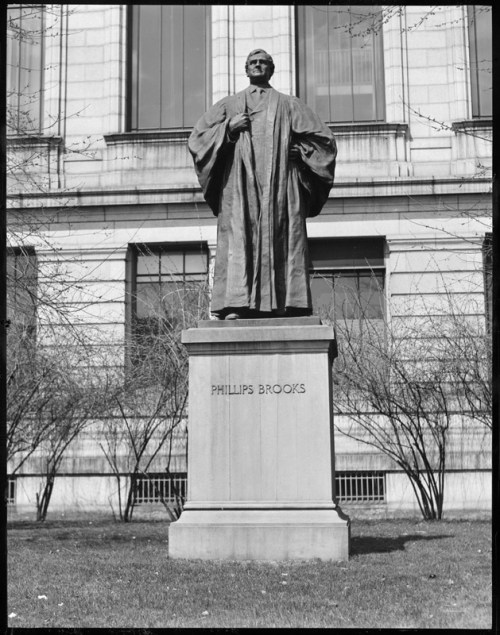
–Phillips Brooks

08_06_016145.jpg

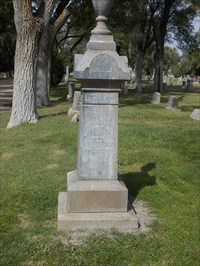
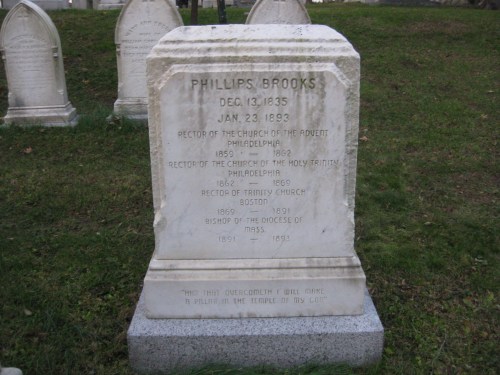
The Episcopal Church remembers Phillips Brooks, priest and bishop, annually on January 23, the anniversary of his death. He is buried in Mount Auburn Cemetery–the first “garden cemetery” in America–in Cambridge, Massachusetts.

trip-to-cambridge-ma-nov-23-2012-037.jpg

Edwin Booth is buried there too, as is Louis Agassiz, geologist, zoologist; Mary Baker Eddy, “discoverer of the principles of Christian Science”; Fannie Farmer, who wrote the cook­book; Isabella Stewart Gardner, whose home is a museum now; Oliver Wendell Holmes, essayist; Winslow Homer, painter, Julia Ward Howe, who wrote the words to “The Battle Hymn of the Republic”; Henry Wadsworth Longfellow…and many more.

image01.jpg

Boston is not high on my places to visit, but who knows? I would like to take a look at this cemetery.

Snowmen prophets of doom

by chuckofish

I kept getting interrupted every time I sat down to write this post yesterday, which was par for the course as my plans kept changing all weekend. But c’est la vie.

I had a good weekend even though I ended up not doing much. I watched a couple of great movies–Allegheny Uprising (1939) and To Have and Have Not (1944)–and the OM hooked up the new DVD player so we could finally watch Hell Is For Heroes (1962) which he got in his Christmas stocking. (It would not play on our old DVD player.) It is not the greatest movie–it is kind of like an extended Combat! episode–but beggars can’t be choosers when it comes to SMcQ movies. And Bobby Darin was pretty great too.

File4_zps015279a8.jpgI went to church on Sunday and read the Prayers of the People. The temperature got up to 63-degrees (not a record) and everyone in town was out and about. It smelled like spring! The old January Thaw.


Snowman-_Snowman_Prophets_of_Doom.png

The wee babes came over for dinner with their parents on Sunday night.

IMG_1473.jpeg

IMG_1472.jpeg

IMG_1468.jpegAnd here’s a song from ol’ Tom Petty that I like:
Have a good week back at the salt mine.

Stoic Saturday

by chuckofish

The DH gave me Ryan Holiday’s The Daily Stoic for Christmas.

Each daily entry starts with a quotation from such greats as Marcus Aurelius, Seneca, and Epictetus, followed by the author’s brief commentary. Every evening after dinner the DH reads the day’s selection aloud to James and me, and then we discuss it. It’s very informal and a lot of fun. If we miss a night, we just catch up the next day. Among other things, the book reminds those of us having trouble dealing with today’s world that things were ever thus, if not actually much worse.

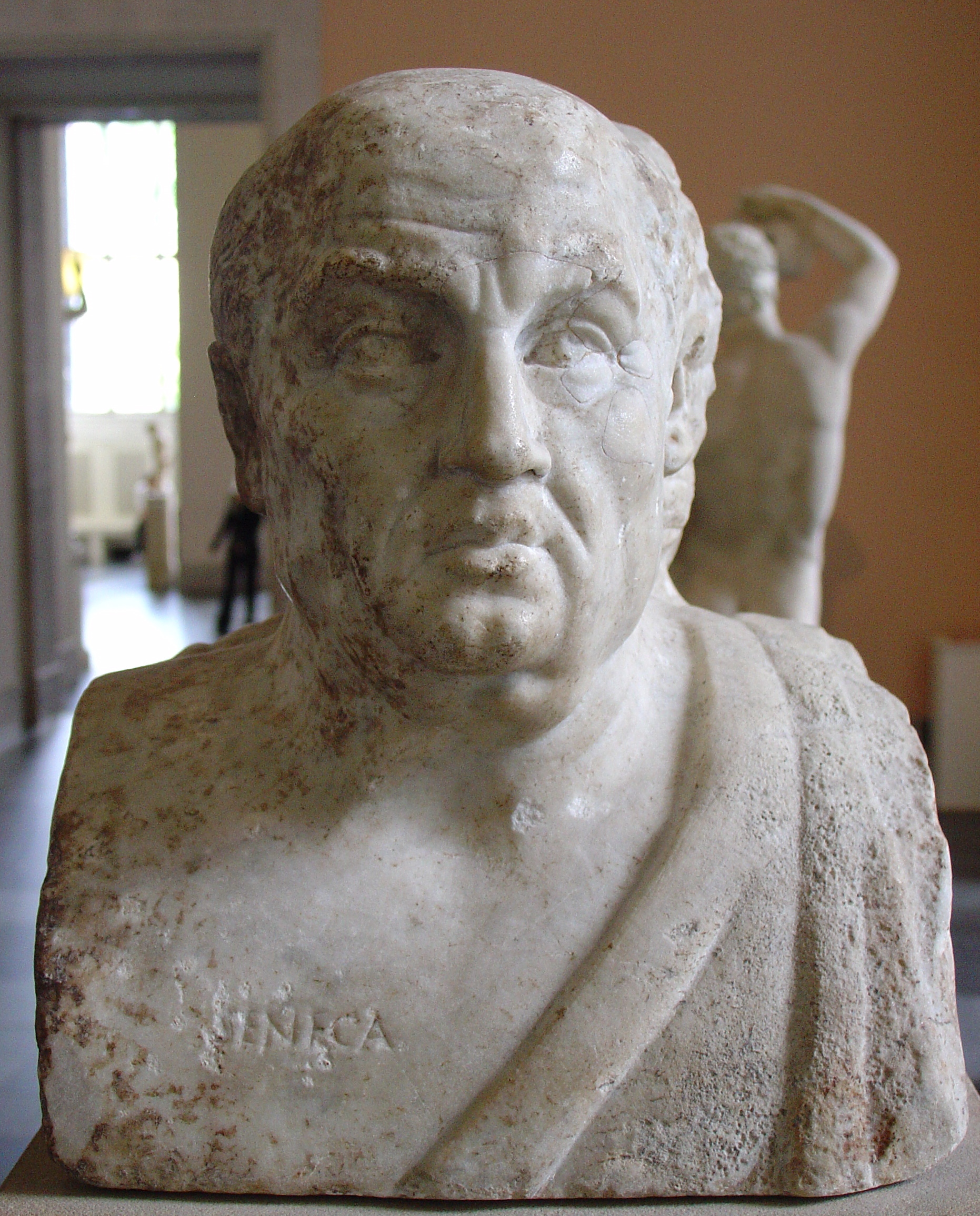
Take poor Seneca (4 BC-65 AD), for example. Born into a prominent Roman family, Seneca made a splash in the Senate, but drew the ire of the Emperor Caligula, who promptly ordered him to commit suicide. Only the fact that Seneca was already gravely ill and expected to die saved him. Caligula’s death in 41 AD did not solve Seneca’s problems, for Messalina, wife of the new Emperor, Claudius, accused Seneca of having an affair with Caligula’s sister.

Would you have an affair with this man?

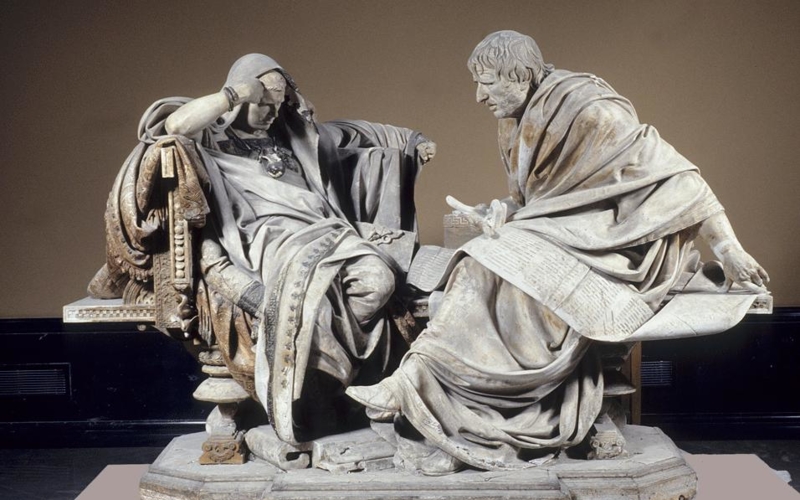
As a result, Seneca was exiled to Corsica, where he remained until 49 AD, when Agripinna, Claudius’ sister, had him recalled to tutor her son, Nero, the guy who, as Emperor, would fiddle while Rome burned. Things did not turn out well for Seneca.

By 54 Nero had become Emperor. At first, Seneca advised young Nero and everything seemed to be going well.

Not a willing pupil. Nero-and-Seneca Converse by Eduardo-Barron. Prado-Museum

Eventually, the paranoid emperor accused Seneca of conspiring to murder him (Nero), and forced the unfortunate philosopher to commit suicide. That’s what you get for hobnobbing with the rich and powerful.

Whatever Seneca’s personal failures, he was a great thinker and writer. He  found a way to deal with life’s challenges — and certainly he faced a lot of those. When you feel overwhelmed or powerless, consider reading the Stoics. As Epictetus wrote in his Discourses (2.5.4-5):

The chief task in life is simply this: to identify and separate matters so that I can say clearly to myself which are externals not under my control, and which have to do with the choices I actually control.

In other words, there’s no point getting upset about things you can’t control. Concentrate on what you can control, namely, yourself. As good old Seneca said, “the happy life is to have a mind that is free, lofty, fearless and steadfast” (Essays and Letters).

Sounds good to me.

Be free, lofty, fearless and steadfast this weekend!