dual personalities

Month: February, 2017

They don’t make ’em like that anymore..

by chuckofish

Yesterday I did not read the news at all and only used the internet for work.  It was the first truly pleasant day I’ve had in weeks. Rather than dissect the deplorable (can I even use that word now?) state of partisan conflict in this country, I’m going to write about a political figure known for his bipartisanship, John H. Chafee, a Marine veteran of WWII and Korea, Governor of Rhode Island, Secretary of the Navy, and Republican Senator. He died in 1999, apparently along with cooperation in government.
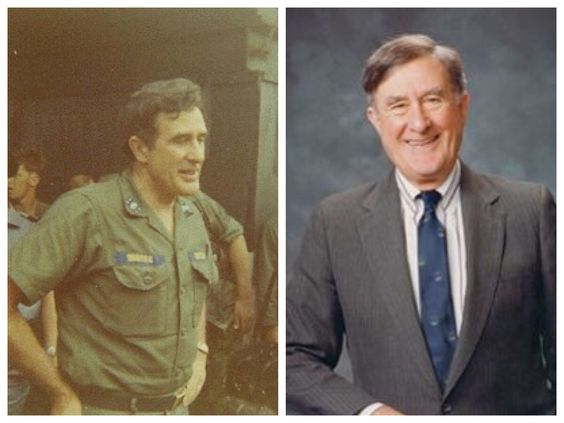
Chafee as a Marine and as a Senator

Chafee as a Marine and as a Senator

Born in 1922 into a prominent (yes, privileged), old Rhode Island family. Chafee was a student at Yale when the Japanese bombed Pearl Harbor. He immediately joined the Marines, eventually fighting on Guadalcanal and, after being commissioned 2nd Lieutenant, on Okinawa. After the war, he graduated from Yale in 1947 (a member of Skull and Bones no less) before attending Harvard Law School (1950). Recalled to active service in 1951 , he served as a Marine Captain in the Korean War. I discovered Chafee in the Korean War memoir I just read, The Coldest War, by James Brady. Since Brady called Chafee, his CO,  “the only truly great man I’ve yet met in my life” (p. 136), I thought I should look him up. He was, indeed, one of the rare breed of honorable politicians.

As first a Governor and then a U.S. Senator, Chafee was renown for his integrity, fairness and willingness to work with the opposition. You can read all about it in the (typically slanted) New York Times obituary.  Still, back in those days opponents could appreciate each other to a degree unheard of today. After all, President Clinton, a Democrat, awarded Republican Chafee the Presidential Medal of Freedom, albeit posthumously. In the citation, Clinton noted, “He embodied the decent center. For him, civility was not simply a matter of personal manners. He believed it was essential to the preservation of our democratic system” (Wikipedia). We could sure use that kind of civility in Washington now, don’t you think?

Appropriately, Chafee’s final public speech took place at the National Cathedral in Washington, where he spoke in celebration of the National Trust for Historic Preservation’s 50th anniversary, saying:

”Naysayers may ask, What difference does saving one train station or post office truly make in the future of America? My response is this: Preservation is not just about preserving brick and mortar, lintel and beam. It is about the quality of life, and the possibility of a bright future. Carl Sandburg expressed the danger of losing touch with our past when he said, ‘If America forgets where she came from, if people lose sight of what brought them along, then will begin the rot and dissolution.’ ” (quoted in the NYT obituary)

We would all do well to remember those wise words. I’m sure I wouldn’t have agreed with John Chafee on many issues, but that’s just the point. We should be able to work together despite our differences.

Let’s not lose sight of what brought us along!

Sources: Wikipedia, The New York Times, and James Brady’s The Coldest War. Photo from Pintarest.
Friday movie pick

by chuckofish

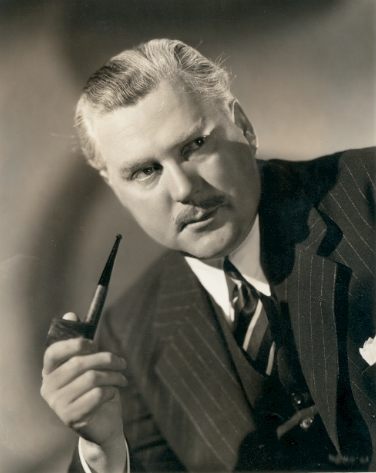
Tomorrow is the birthday of the famous character actor Nigel Bruce (1895–1953).

nigelbruce.jpg

The second son of a baronet, Bruce served in WWI as a lieutenant in the 10th Service Battalion of the Somerset Light Infantry. He was seriously wounded at the Battle of Cambrai (1917)and spent the rest of the war in a wheelchair. After the war, he went on the stage and then moved to Hollywood, becoming a leading member of the British film colony in Los Angeles where he was captain of the (mostly British) Hollywood Cricket Club.

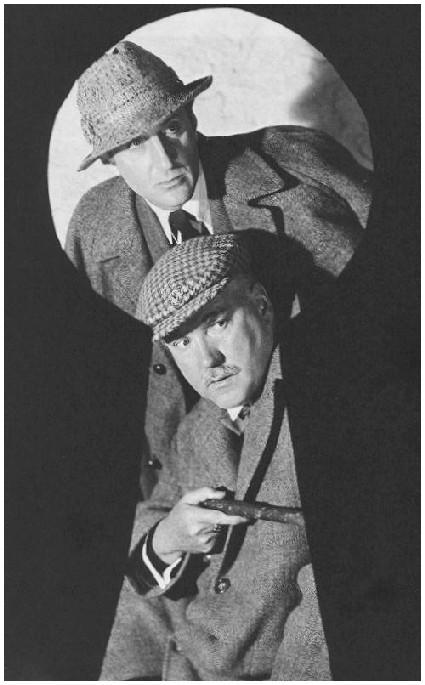
Best known for portraying Dr. Watson in fourteen Sherlock Holmes movies with Basil Rathbone,

sherlock.jpg

he made 78 movies–many of them classics. He is one of those guys who is always turning up in favorite films.

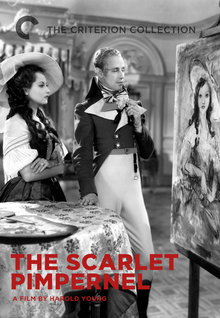
My personal favorite is The Scarlet Pimpernel (1934) starring Leslie Howard and Merle Oberon. Bruce played the Prince of Wales: “Why, damn me, Percy, you’re brainless, spineless, useless: But you do know clothes!”

50136222.jpeg

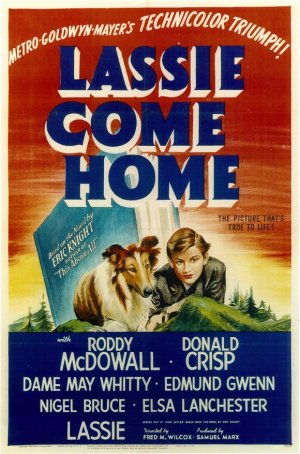
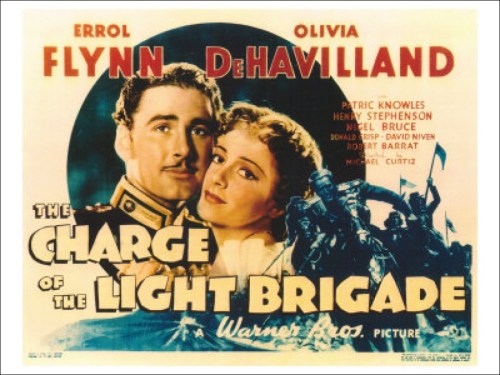
I think I will toast Nigel Bruce tonight and watch The Scarlet Pimpernel, but you could watch The Charge of the Light Brigade (1936), Rebecca (1940), Lassie Come Home (1943) or any one of those Sherlock Holmes movies.

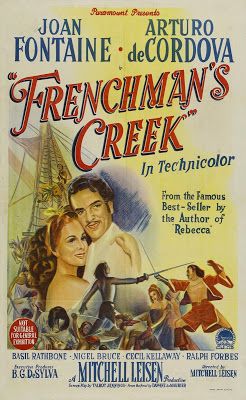
Lassie_Come_Home,_Original_Theatrical_Poster.jpgfrenchman.jpg

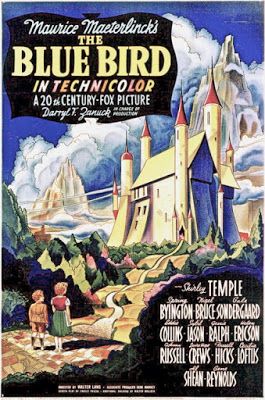
charge of the lught.jpgthe blue bird.jpg

They just don’t make ’em like Nigel Bruce anymore!

I should also note that February is ’31 Days of Oscar’ month at TCM, so check out their schedule for a particularly strong line-up of Academy Award-winning titles.

Have a great weekend!

Thursday chuckle

by chuckofish

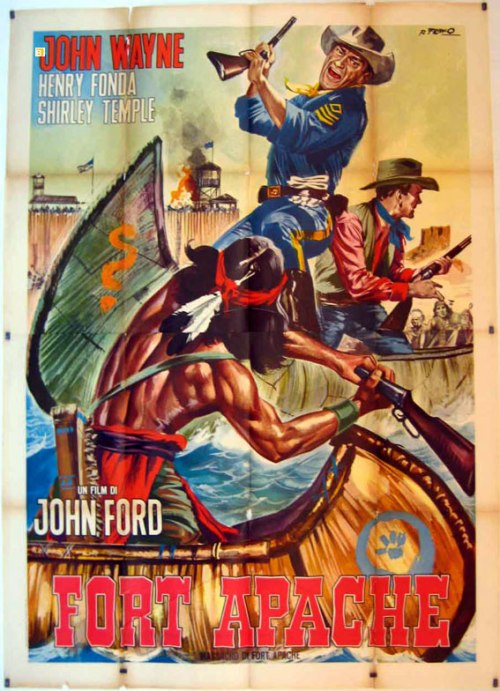
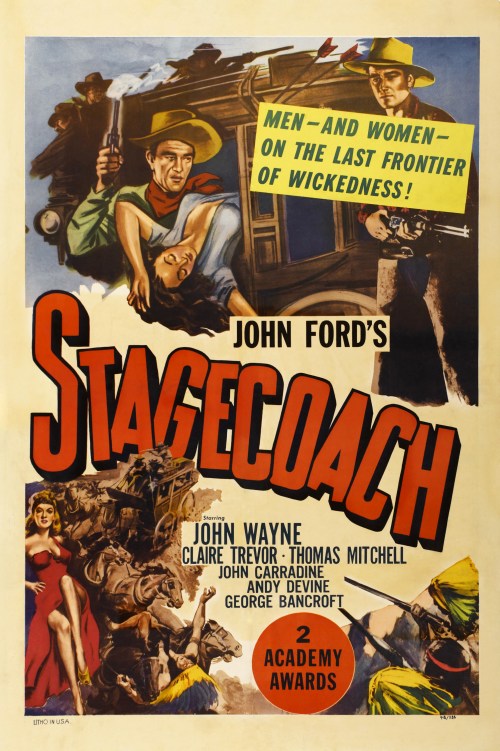
Here are a few examples I found recently of movie posters that bear no relation whatsoever to the film they are allegedly marketing.

fortapache.jpg

I mean seriously. Fort Apache (1948) takes place in the desert and was filmed in Monument Valley, Arizona. There are no Indians in canoes. And if there were canoes, John Wayne would know better than to stand up in one.

Poster-Stagecoach-1939_01.jpg

Are you kidding me? Words fail. “Men and women on the last frontier of wickedness”–if that’s what you were expecting, you were in for a big disappointment!

I wonder if this marketing method–i.e. blatantly wrong illustrations–ever worked.

Weird.

Have a good Thursday, or Friday eve, as we say in flyover land.

God direct my thinking today

by chuckofish

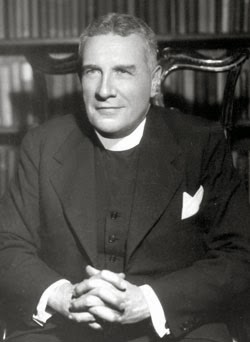
Yesterday on the Episcopal Church calendar was the lesser feast day of Sam Shoemaker, (1893-1963), who was an Episcopal priest instrumental in the Oxford Group and founding principles of Alcoholics Anonymous.

Shoemaker.jpg

Lest we forget, Dr. Samuel Moor Shoemaker was the rector of the Calvary Church in New York City, which was the U.S. headquarters of the Oxford Group. Bill Wilson attended Oxford Group meetings at the Calvary Church and Sam was instrumental in assisting Bill Wilson with the writing of the book Alcoholics Anonymous (nickname: The Big Book).

In 1917 Sam Shoemaker was sent to China to start a branch of the YMCA and to teach at the Princeton-in-China Program. Feeling discouraged there in 1918, he first met Frank Buchman, who told him of the four absolutes, honesty, purity and unselfishness and love. Shoemaker would later speak of the meeting as a major influence for the start of his ministry, that being the time when he decided to let go of self and let God guide his life.

Bill Wilson would later give credit to Sam Shoemaker whom he referred to as a co-founder of AA.

” It was from Sam Shoemaker, that we absorbed most of the Twelve Steps of Alcoholics Anonymous, steps that express the heart of AA’s way of life. Dr. Silkworth gave us the needed knowledge of our illness, but Sam Shoemaker had given us the concrete knowledge of what we could do about it, he passed on the spiritual keys by which we were liberated. The early AA got its ideas of self-examination, acknowledgement of character defects, restitution for harm done, and working with others straight from the Oxford Group and directly from Sam Shoemaker, their former leader in America, and from nowhere else.”

Rev. Shoemaker wrote over thirty books, at least half of which were circulating before AA’s 12 Steps were first published in the Big Book in 1939. Shoemaker’s contributions and service to Alcoholics Anonymous and as a minister of the Anglican Communion and Episcopal Church of America have had a worldwide effect. The philosophy that Shoemaker codified, in conjunction with Bill Wilson, is used in almost every country around the world to treat alcoholism.

God bless these amazing guys who started AA! Truly their coming together and working out the AA system was a miracle.

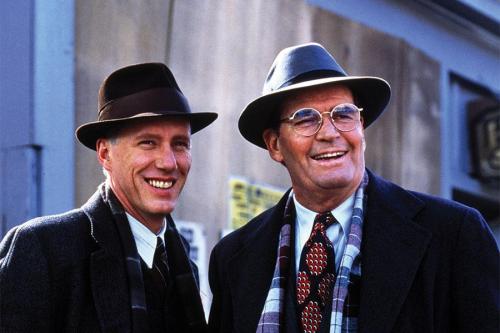
There is, by the way, a good made-for-tv movie called My Name is Bill W. (1989 Hallmark Hall of Fame) starring James Woods and James Garner. It is based on the true story of William Griffith Wilson and Dr. Robert Holbrook Smith, M.D.,  the co-founders of AA.

promise-1-900x600.jpg

James Woods won an Emmy for his portrayal of Wilson. I don’t remember if Sam Shoemaker is featured as a character–they no doubt soft-pedaled the spiritual side of the story. I think I will see if I can find it to watch. I remember thinking it was excellent at the time.

Holy God, we give thanks to thee for the vision of Samuel Shoemaker, who labored for the renewal of all people: Grant, we pray, that we may follow his example to help others find salvation through the knowledge and love of Jesus Christ our Savior; who with thee and the Holy Spirit liveth and reigneth, one God, for ever and ever. Amen.

A lot of material for this post is lifted from http://www.satucket.com/lectionary/sam_shoemaker.htm