Long remember
by chuckofish
This week marks the 150th anniversary (July 1–3, 1863) of the battle of Gettysburg in Pennsylvania. The battle involved the largest number of casualties of the entire war (Antietam had the most in a single day) and is often described as the war’s turning point.
Last year I read Long Remember written in 1934 by Mackinlay Kantor.
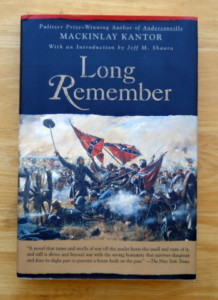
It is considered the first “realistic” novel about the Civil War. I guess that means it does not glorify it or romanticize it in any way. It deals with the residents of the town of Gettysburg and how the battle affected them.
“She had never thought that war could be like this, with such a desperate casualness about it. War was fought in fields: there was the field of Shiloh, the field of Antietam, the field of Fredericksburg. She knew; she had read the papers. The papers mentioned nothing of people running across back yards and knocking down the clothes-props as they went.”
I liked it very much and highly recommend it.
I have also read The Killer Angels by Michael Shaara, the Pulitzer Prize-winning novel of 1975.
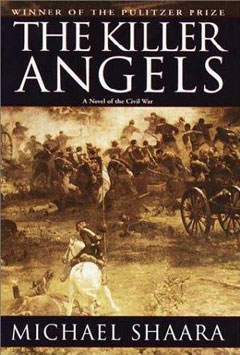
This novel introduces you to all the main players on both sides in the battle of Gettysburg. My favorite, of course, is Joshua Lawrence Chamberlain, who, though we share a surname, I cannot claim as a relative.
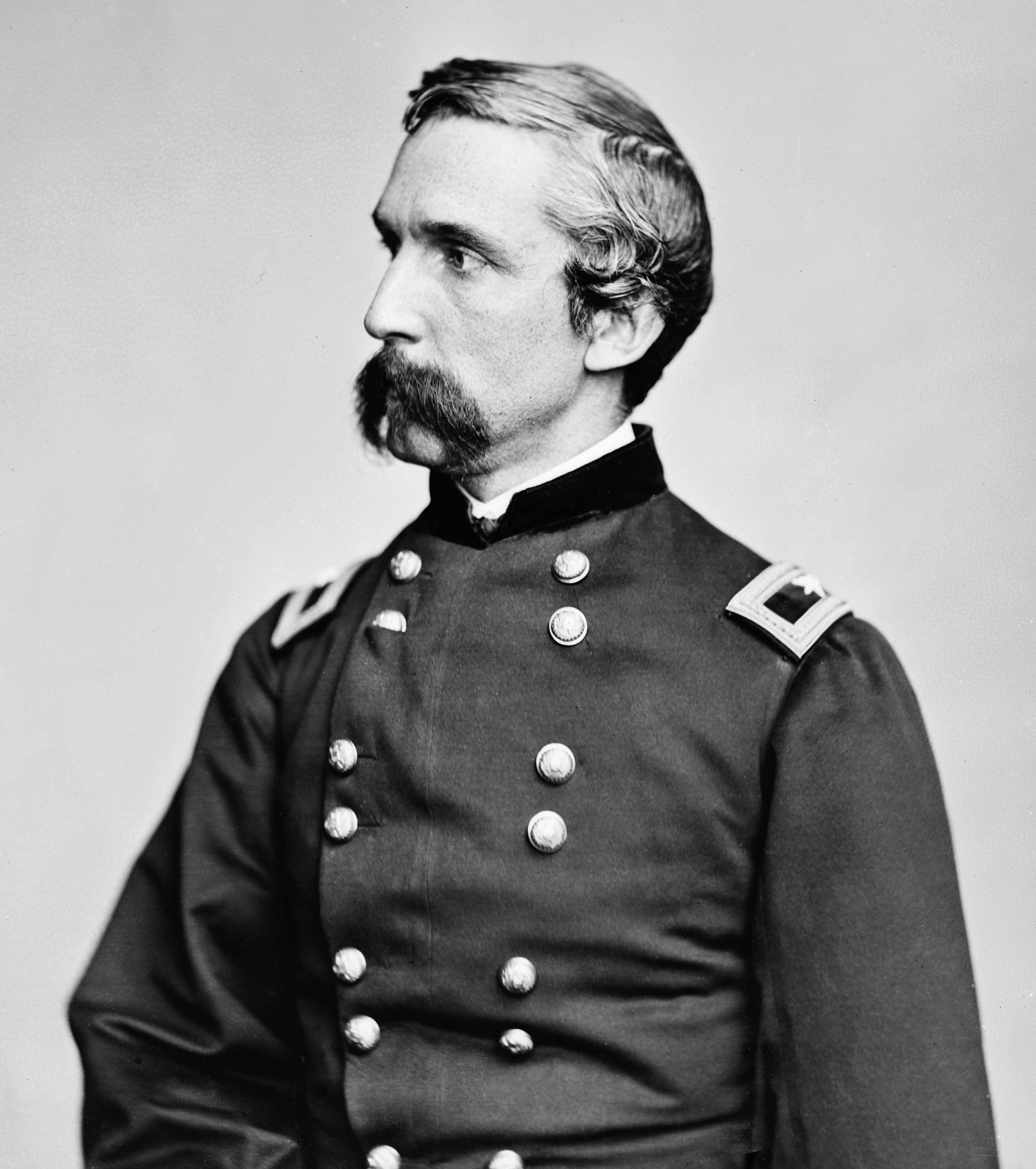
Col. Joshua Chamberlain of the 20th Maine Infantry, awarded the Medal of Honor, Governor of Maine and President of Bowdoin College
Col. Chamberlain was, of course, a Chamberlain from Maine, while our Chamberlins (sans “a”) hailed from Vermont. You will recall that my dual personality blogged about our other non-relative at Gettysburg, Waldo Farrar here.
They broke the mold when they made old Joshua Chamberlin. A devout Congregationalist and choir member, he was a college professor when the Civil War began. Chamberlain believed the Union needed to be supported by “all those willing” against the Confederacy. Of his desire to serve in the War he wrote to Maine’s Governor Israel Washburn, Jr., “I fear, this war, so costly of blood and treasure, will not cease until men of the North are willing to leave good positions, and sacrifice the dearest personal interests, to rescue our country from desolation, and defend the national existence against treachery.” Chamberlain put his money where his mouth was and joined up.
For his “daring heroism and great tenacity in holding his position on the Little Round Top against repeated assaults, and carrying the advance position on the Great Round Top”, Chamberlain was awarded the Medal of Honor.
In early 1865, Chamberlain was given command of the 1st Brigade of the 1st Division of V Corps, and he continued to act with courage and resolve. On March 29, 1865, his brigade participated in a major skirmish on the Quaker Road during Grant’s final advance that would finish the war. Despite losses, another wound (in the left arm and chest that almost caused amputation), and nearly being captured, Chamberlain was successful and brevetted to the rank of major general by President Abraham Lincoln. Chamberlain gained the name “Bloody Chamberlain” at Quaker Road. Chamberlain kept a bible and framed picture of his wife in his left front “chest” pocket. A confederate shot at Chamberlain. The bullet went through his horse’s neck, hit the picture frame, entered under Chamberlain’s skin in the front of his chest, traveled around his body under the skin along the rib, and exited his back. To all observers Union and Confederate, it appeared that he was shot through his chest. He continued to encourage his men to attack. All sides cheered his valiant courage, and the union assault was successful.
In all, Chamberlain served in 20 battles and numerous skirmishes, was cited for bravery four times, had six horses shot from under him, and was wounded six times.
Chamberlain left the army soon after the war ended, going back to his home state of Maine. Due to his immense popularity he served as Governor of Maine for four one-year terms after he won election as a Republican. His victory in 1866 set the record for the most votes and the highest percentage for any Maine governor by that time. He would break his own record in 1868.
After leaving political office, he returned to Bowdoin College. In 1871, he was appointed president of Bowdoin and remained in that position until 1883, when he was forced to resign due to ill health from his war wounds.
Chamberlain died of his lingering wartime wounds in 1914 at Portland, Maine, age 85, and is buried in Pine Grove Cemetery in Brunswick, Maine. He was the last Civil War veteran to die as a result of wounds from the war.
Well, I seem to have gotten off the subject of Gettysburg here, but Col. Chamberlain has that effect on me. We should all toast Col. Chamberlain tonight and all those brave souls who fought during those bloody July days in Gettysburg. Going to the Gettysburg National Military Park is on my bucket list. One of these days.
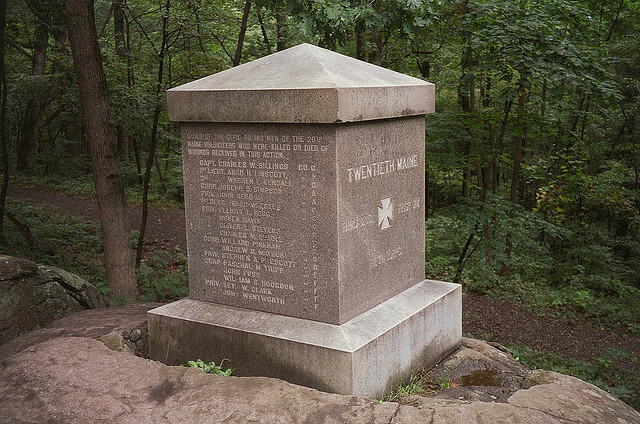
“The faith itself was simple; he believed in the dignity of man. His ancestors were Huguenots, refugees of a chained and bloody Europe. He had learned their stories in the cradle. He had grown up believing in America and the individual and it was a stronger faith than his faith in God. This was the land where no man had to bow. In this place at last a man could stand up free of the past, free of tradition and blood ties and the curse of royalty and become what he wished to become. This was the first place on earth where the man mattered more than the state. True freedom had begun here and it would spread eventually over all the earth. But it had begun HERE. The fact of slavery upon this incredibly beautiful new clean earth was appalling, but more even than that was the horror of old Europe, the curse of nobility, which the South was transplanting to new soil. They were forming a new aristocracy, a new breed of glittering men, and Chamberlain had come to crush it. But he was fighting for the dignity of man and in that way he was fighting for himself. If men were equal in America, all the former Poles and English and Czechs and blacks, then they were equal everywhere, and there was really no such thing as foreigner; there were only free men and slaves. And so it was not even patriotism but a new faith. The Frenchman may fight for France, but the American fights for mankind, for freedom; for the people, not the land.”
― Michael Shaara, The Killer Angels
 dual personalities