Of intrepid ancestors…part II
by chuckofish
Last week when I blogged about our great, great grandmother I set the stage for a tale of adventure, hard work, and a great deal of woe. Soon after Ann married and delivered her bouncing baby son, Daniel Herbert Hilton Cameron, they joined her husband, Daniel, and his regiment and embarked for Fort Beaufort, South Africa. Today this outpost of the British Empire is a modest spot for the historically minded tourist.

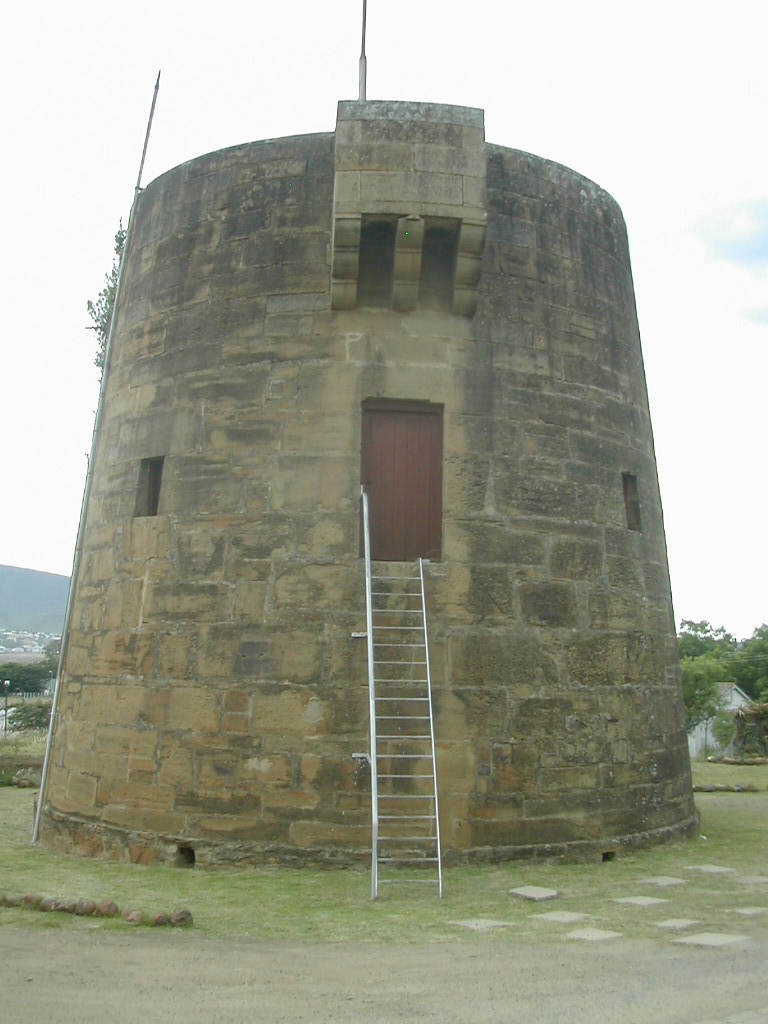
The fort boasted a Martello tower, which was built in the 1830s when such things were popular, though usually for coastal defense (Fort Beaufort lies inland at the confluence of a couple of rivers and not on the coast).
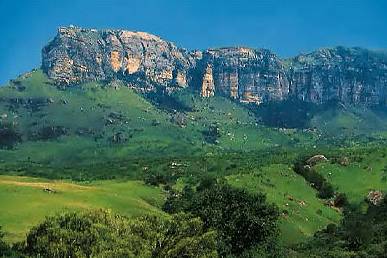
The eastern cape is a beautiful area with spectacular scenery, and by the 1860s it was really quite peaceful. The young family seemed to thrive.
Ann and Daniel had another child, a girl named Ann, but then Daniel fell ill with some sort of stomach ailment exacerbated by a wound received at the Battle of Alma during the Crimean War. Daniel lingered for three painful months before expiring in 1861.
Exactly what happened next is something of a mystery. Ann Hilton Cameron had two more children, Kenneth and Thomas, both born after Daniel’s death, and then she apparently also died. The orphaned children resurfaced in Scotland in 1871. The census identifies Ann, Kenneth, and Thomas, who were born in “the Cape of Good Wood” — presumably an erroneous transcription of the Cape of Good Hope — as minors ages 10, 8, and 6, living with two spinster sisters, Elizabeth and Mary McColl, in Killmallie Argyll. I’m sure of the identification because later letters from Kenneth to my great grandfather identify a brother,Thomas, and sister, Ann. There is also a family connection with Killmallie, which Daniel senior gave as his birth place in his enlistment papers, and of course, the children’s South African origins. But where, you might ask, was our great grandfather, Daniel H.H. Cameron?
As was usual at the time, poor Daniel was deemed too old for the spinster sisters — after all he was a teenaged boy and therefore potentially dangerous. Since he was still too young to be on his own, he was sent to the ‘orphan hospital’ that was part of the St. Cuthbert’s poor house in Edinburgh — an imposing place after the Cape sunshine.
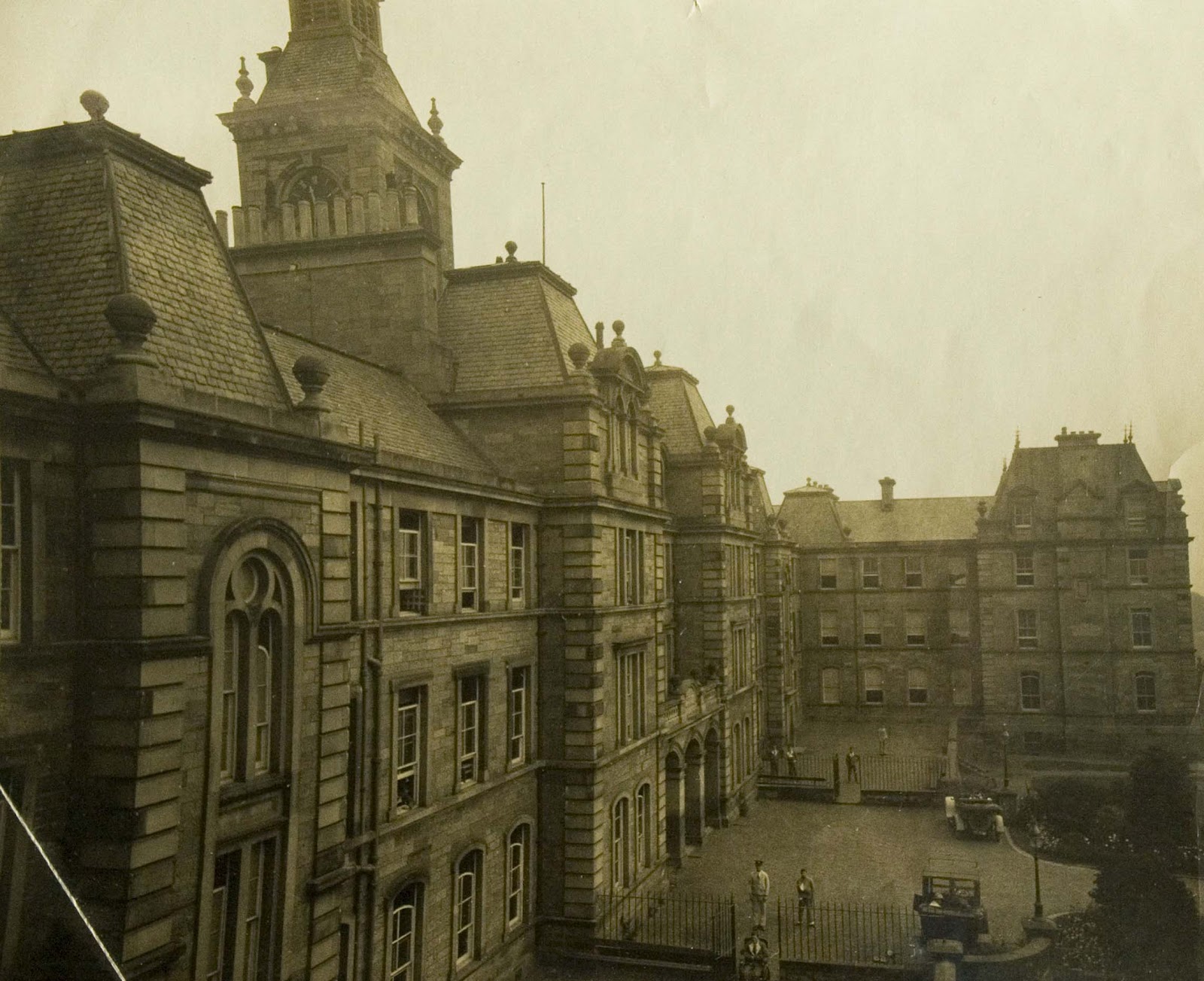
Craigleith poor house in c. 1914
According to a contemporary description of the then new poor house,
The accommodation for the male inmates, which is on the west side of the building, is subdivided into four classes — very decent, decent, depraved, and boys.
The description conjures up dreadful images a la Oliver Twist. I’m not sure how long DHHC was there, but it must have been at least two or three years. I shudder to think. As the oldest child he would have been acutely aware of the loss of both his parents and his siblings as well as his freedom. The military community at Fort Beaufort had probably been close-knit and fairly pleasant for children. How traumatic it must have been to leave everything familiar and undertake a long, uncomfortable journey to cold, unfamiliar Scotland only to be separated from his siblings and stuck in a dingy big-city poor house.
Despite the tremendous challenges, however, Daniel survived and thrived…but that story is for next week. In the meantime, let us remember those who went before us and whose struggles made us possible!

 dual personalities