What to wear to the World Series
by chuckofish

http://www.epauletshop.com/servlet/the-1128/Gant-MB-Cardinal-Fairisle/Detail
(Hat tip to Michael Kurth for this fashion find.)
http://www.epauletshop.com/servlet/the-1128/Gant-MB-Cardinal-Fairisle/Detail
(Hat tip to Michael Kurth for this fashion find.)
Then the Pharisees went and took counsel how to entangle him in his talk. And they sent their disciples to him, along with the Hero’dians, saying, “Teacher, we know that you are true, and teach the way of God truthfully, and care for no man; for you do not regard the position of men. Tell us, then, what you think. Is it lawful to pay taxes to Caesar, or not?” But Jesus, aware of their malice, said, “Why put me to the test, you hypocrites? Show me the money for the tax.” And they brought him a coin. And Jesus said to them, “Whose likeness and inscription is this?” They said, “Caesar’s.” Then he said to them, “Render therefore to Caesar the things that are Caesar’s, and to God the things that are God’s.” When they heard it, they marveled; and they left him and went away.
–Matthew 22: 15-22
I wish I could tell you what the sermon was about today, but I really can’t. Our associate rector lost me somewhere early in her rambling exposition on the gospel and how it’s about everything-belongs-to-God-and-we-need-to-share-it. Yadda yadda over and out.
If I had been giving the sermon I would have talked about how great Jesus is and how he could, in just a few words, talk circles around those Pharisees. No wonder they hated him. I mean he had a tone! He’s saying don’t mess with me. These are details. I would have quoted from Salinger’s great Zooey rant about his sister’s mis-use of the Jesus prayer. Here’s part of it:
“If God had wanted somebody with St. Francis’s consistently winning personality for the job in the New Testament, he’d’ve picked him, you can be sure. As it was, he picked the best, the smartest, the most loving, the least sentimental, the most unimitative master he could possibly have picked.”
Yes, indeed.
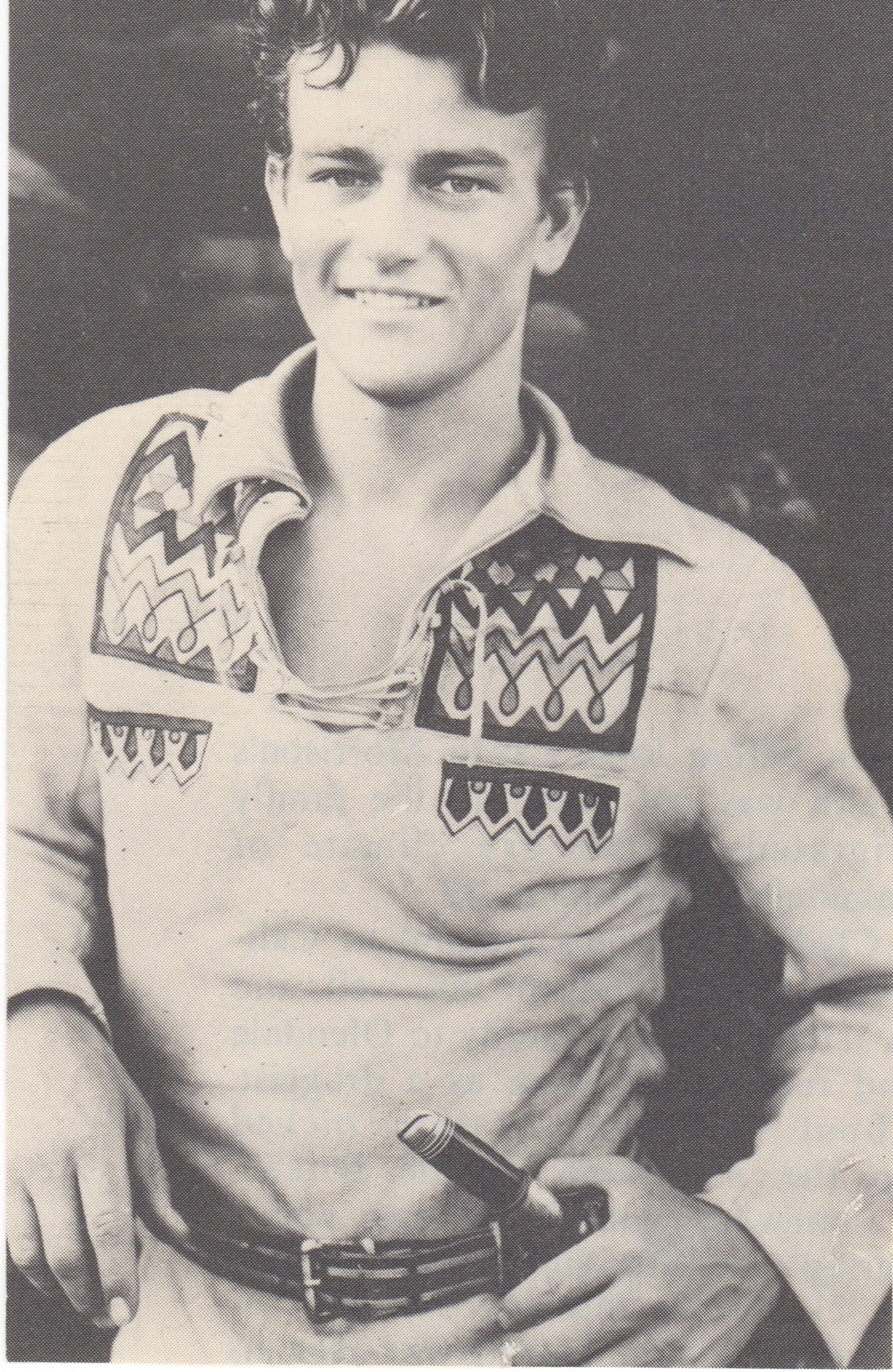
Yes, it’s John Wayne–around 1930 when he made The Big Trail. Adorable.
Since I did not make a Friday recommendation (although some of you no doubt ran out to rent Kingdom of the Spiders), I recommend watching a John Wayne movie (any John Wayne movie) tonight. For myself, I think I will watch one of my favorites: The Man Who Shot Liberty Valance. John Wayne (at his very best) dominates this movie, despite Jimmy Stewart having a lot more screen time. It’s also John Ford’s last great movie. And there are lots of the usual character actors doing their best as well: Strother Martin, Edmund O’Brien, John Qualen, Andy Devine, and the impressive Woody Strode. Lee Marvin is very scary. This is the movie that even mentions the Picketwire River (The Purgatoire) in Las Animas County, southeastern Colorado, pioneered by our own ancestors. I can’t think of a better way to spend a Saturday evening.
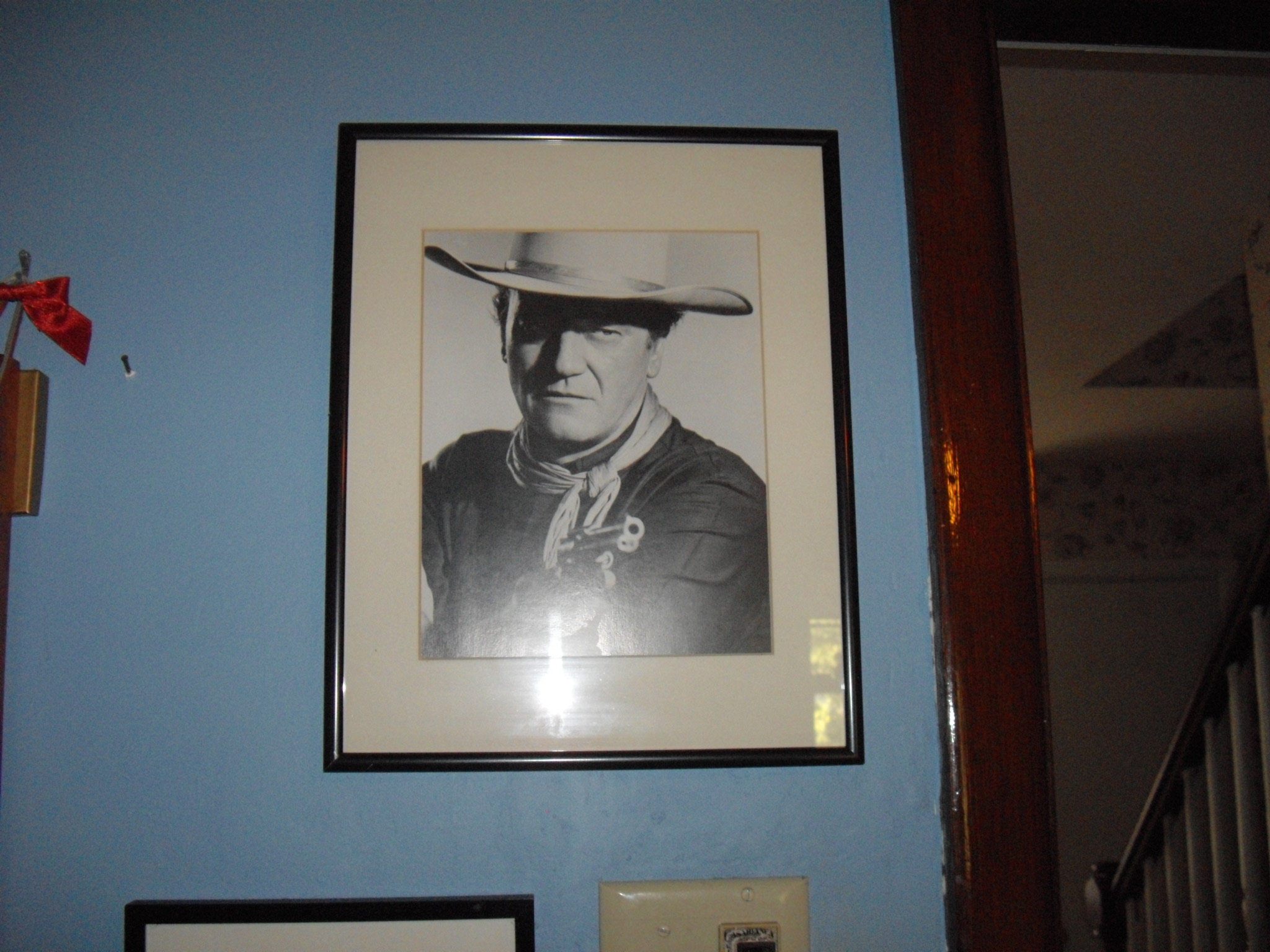
And, yes, that is a picture of John Wayne (from Liberty Valance) on my kitchen wall. On occasion people have asked why I have a picture of John Wayne on my kitchen wall. I always say, “Doesn’t everyone?”
Remember “Kingdom of the Spiders” (1977) starring the inimitable William Shatner? “Investigating the mysterious deaths of a number of farm animals, vet Rack Hansen discovers that his town lies in the path of hoards of migrating tarantulas. Before he can take action, the streets are overrun by killer spiders, trapping a small group of towns folk in a remote hotel.” (IMDB.com)
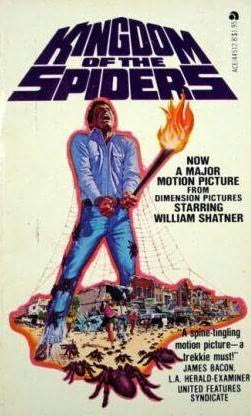
Well, sometimes I wonder about my own home:



If you recall the final scene of this horror classic, the hotel is completely enveloped in spider webs! I feel sometimes like I will wake up and my own house will likewise be encased in cobwebs. Spiders work fast! I mean, I’ve had a soft spot for spiders ever since reading Charlotte’s Web, but really there are limits.
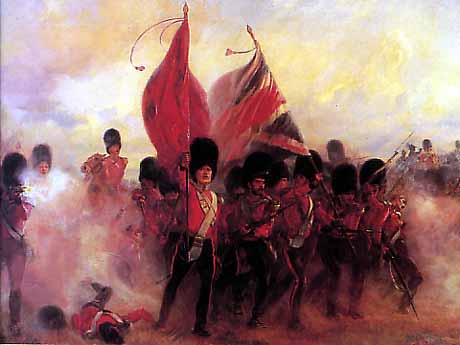
Scots Fusilier Guards attacking the Great Redoubt
Our great great grandfather, Daniel Cameron, was a Corporal in the Scots Fusilier Guards during the Crimean War. The Battle of Alma was the first battle of the war and a tough one for his unit, which was attacking uphill against a heavily defended position. Much of the fighting was at close quarters; the regiment almost lost its colors and the four men who managed to hold on to them were awarded the Victoria Cross. Daniel Cameron was shot or bayoneted “in the belly” — a bad place to be wounded. I believe the wound never healed properly and finally killed him when he was serving in South Africa in 1861. For a dreadful and impressive full list of the SFG wounded at Alma go here .
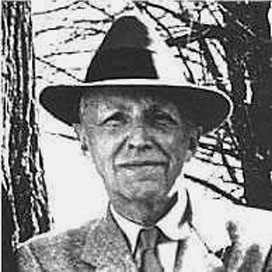
Today is the birthday of author Conrad Richter (October 13, 1890—October 30, 1968). Richter is one of my favorite writers, one I go back to over and over again. In fact, I just recently re-read The Waters of Kronos (1960) for the third or fourth time. He won the National Book Award for this book, and I highly recommend it. Unfortunately, Richter will probably be best remembered for A Light in the Forest because it was made into a movie by Walt Disney in 1958. It starred James MacArthur and Fess Parker.
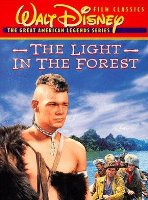
They still teach this book in some middle schools, but he is not a “young adult writer” and he should not be relegated to that particular pigeon hole.
Louis Bromfield described Richter’s work this way: “He has that gift – the first and most important in a novelist – of creating for the reader a world as real as the one in which he lives, a world which the reader enters on the first page and in which he remains until the last.” (It should be noted that Louis Bromfield is not that kind a writer, but I’m glad he could recognize the gift in others.) Anyway, I whole-heartedly recommend The Awakening Land trilogy (The Trees, The Fields, The Town) as well as A Company of Strangers, The Free Man, A Simple Honorable Man, and The Waters of Kronos.
For a moment Sayward reckoned that her father had fetched them unbeknownst to the Western ocean and what lay beneath was the late sun glittering on green-black water. Then she saw that what they looked down on was a dark, illimitable expanse of wilderness. It was a sea of solid tree-tops broken only by a gash where deep beneath the foliage an unknown stream made its way. As far as the eye could reach, this lonely forest sea rolled on and on till its faint blue billows broke against an incredibly distant horizon.
–from The Trees (1940)

The St. Louis Rally Squirrel and Ted Drewes frozen custard. We’re talkin’ baseball. Baseball in St. Lou…

Pumpkins, chrysanthemums, leaves, ivy, and wet pavement.
Ay, thou art welcome, heaven’s delicious breath,
When woods begin to wear the crimson leaf,
And suns grow meek, and the meek suns grow brief,
And the year smiles as it draws near its death.–from “October”, a sonnet by William Cullen Bryant
When Beowulf is dying he has time for a few pithy words, including:
“I took what came,
cared for and stood by things in my keeping,
never fomented quarrels, never swore to a lie.”
If, when the time comes, I could sum up my life the same way, I’d be satisfied, wouldn’t you? I just love Anglo-Saxon poetry. The translation is, of course, Seamus Heaney’s.

 dual personalities